


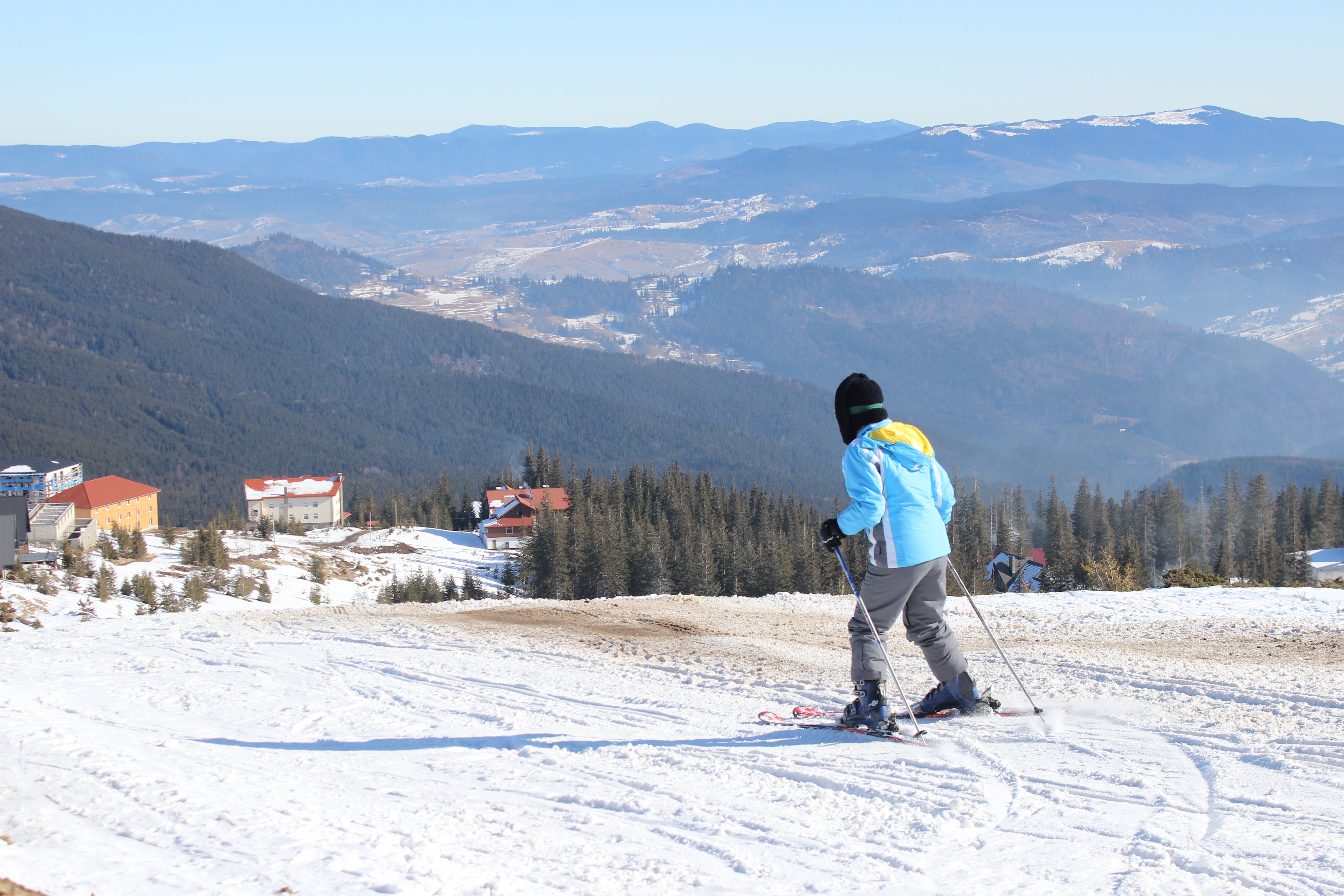
Last Wednesday at 10 AM, while most physicians were rounding or seeing patients, I stood at the top of the Magic Carpet watching my four-year-old launch himself down the bunny slope at Mount Bachelor.
This winter has been strange for us snow lovers. Unprecedented drought, bare patches where powder should be, conditions that would have kept me home in previous years. But Wes doesn’t care about the snow report. He doesn’t need perfect conditions for a perfect day.
No turns. No speed control. Just pure, unfiltered joy, even on terrible snow.
When he crashed, and he crashed spectacularly into a patch of ice that definitely wasn’t “optimal”, he popped up laughing, snow in his goggles, already shuffling back to do it again. Meanwhile, I caught myself calculating how many runs we’d completed, wondering if we were “maximizing” our lift ticket value on an admittedly mediocre snow day.
That’s when it hit me: My son was teaching me something I’d forgotten about playing in imperfect conditions. Also known as life.
The Perfect Physician Paradox
We physicians are trained to never fall. Never fail. Never admit uncertainty.
This serves us well in the OR or ICU. When I’m managing a crashing patient, that drive for perfection, that refusal to accept failure, saves lives. I’m grateful for this training. It makes us excellent clinicians.
But somewhere along the way, we started applying surgical precision to our entire lives.
The perfect marriage. The perfect parent. The optimized workout routine. In Bend, surrounded by professional athletes and weekend warriors, I used to feel inadequate if I wasn’t mountain biking four hours daily, getting faster, going farther.
I forgot why I came to the mountains in the first place. It was never about optimizing.
It was about presence.
The Optimization Trap
Look at how we live now:
Tracking macros but missing family dinner “stuck” at work
Wearing Oura rings to optimize sleep we’re too anxious to enjoy
Listening to podcasts at 2x speed while mowing, so we can be “productive”
Scheduling our kids’ play like it’s clinic time
Turning hobbies into side hustles because rest or play feels like waste
After years of this relentless optimization, how do you feel?
I felt hollowed out. Efficient but empty. I was checking more boxes, moving faster, achieving more metrics, but my life had drained of color. I was living in black and white, experiencing everything through spreadsheets instead of being present.
Life had become data points. I’d forgotten it was supposed to be lived in full color.
What Wes Knows That We’ve Forgotten
Children don’t optimize their play.
Wes doesn’t care if it’s sunny or snowing sideways. He’s not bothered by icy patches or thin coverage. The “conditions” that would have me checking three weather apps and debating whether it’s “worth it” don’t even register for him.
He just… plays. On whatever snow exists. In whatever weather appears.
When did we lose this? When did everything become an opportunity for improvement rather than experience? When did we start needing perfect conditions to begin?
The Courage to Be Terrible
Here’s what terrifies physicians: being beginners again.
We spent decades becoming experts. We’re the ones people turn to for answers. Competence is our identity. So we stay in our lanes, perfecting what we already know, avoiding anything that might make us look foolish.
But here’s what I’m learning in my first year of part-time practice: The magic lives in the beginner spaces.
Take my French lessons. At 49, preparing for our April trip to Paris, I’m stumbling through conversations with my online tutor like a toddler. “Je voudrais un croissant” comes out sounding like I’m performing oral surgery. My tutor, patient and kind, pretends not to wince while I butcher her beautiful language.
I’m writing more, and my first drafts are terrible and unreadable. I’m learning woodworking, and my joints look like they were cut by Wes himself. I’m backcountry skiing, and I’m slow and inefficient.
But I feel more alive than I’ve been in years.
Because when you’re terrible at something, you’re actually present. You can’t optimize what you don’t understand. You can’t multitask through incompetence. You have to just… be there, fully engaged in your spectacular inadequacy.
Breaking Free from Perfection
For early-career physicians: You’re building habits now that will define the next 30 years. Yes, work hard. Yes, build wealth. But also build in spaces where you can fail safely. Take that pottery class. Try that sport where you’ll be terrible. Your patients need you to be perfect. Your life needs you to be human.
For mid-career physicians: That expertise you’ve built in medicine? It doesn’t transfer everywhere, and that’s the gift. You get to be bad at things again. You get to fall and get back up. You get to remember what learning feels like when the stakes are low and the joy is high.
This week’s experiment: Pick something you’re terrible at. Spend one hour doing it badly. No YouTube tutorials first. No optimization. No tracking. Just play.
The Real Question
Standing there on the bunny slope, watching Wes crash joyfully into the same icy patch for the fifth time, I realized I’d been asking the wrong questions all these years.
Not: “How can I optimize this experience?” Not: “Are the conditions good enough?” Not: “Is this worth my time?”
But: “What if being terrible at something is the point?”
What if the medicine for our perfectionism isn’t more achievement but more play? What if the cure for optimization isn’t efficiency but presence?
What if your four-year-old (or your inner four-year-old) knows something your medical training made you forget?
That we don’t need perfect powder to have a perfect day. That falling isn’t failure. It’s freedom.
P.S. – This drought winter is teaching me something about waiting for perfect conditions. If you’re struggling with your own version of “imperfect snow”—whether that’s in your practice, your finances, or your life—I’d love to hear about it. Sometimes the best runs happen on the worst snow days.